
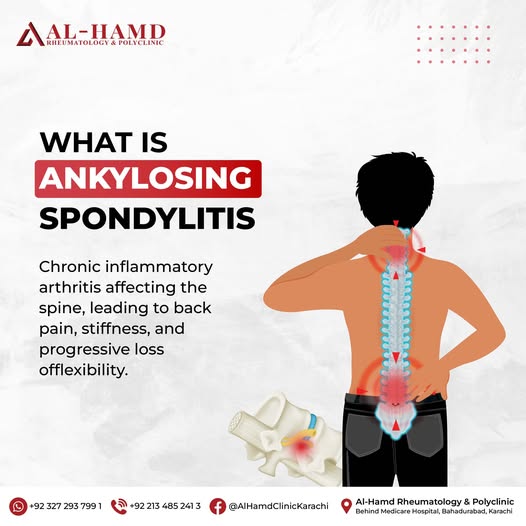
Ankylosing spondylitis (AS) is a chronic form of inflammatory arthritis that primarily targets the spine and the sacroiliac joints connecting the lower spine to the pelvis. Over time, ongoing inflammation can cause new bone to form along the spine, leading to reduced flexibility and, in advanced cases, a stooped posture. AS belongs to a group of conditions known as spondyloarthropathies and tends to develop gradually — which is why persistent back stiffness, especially first thing in the morning or after long periods of rest, should never be dismissed as routine back pain.
Common Symptoms
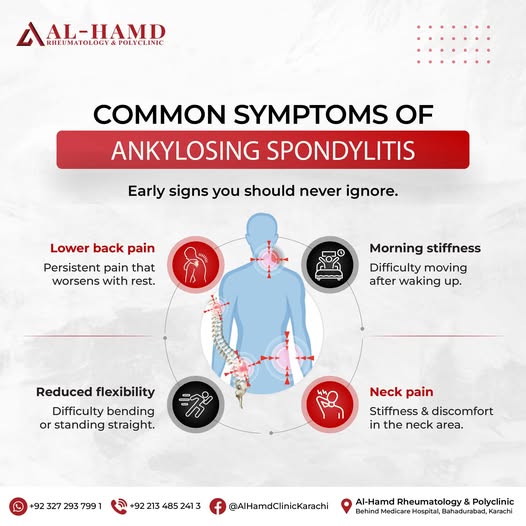
- Persistent lower back pain that improves with movement but worsens with rest
- Morning stiffness that can last well over 30 minutes
- Reduced flexibility and difficulty bending or standing fully upright
- Neck pain and stiffness as the disease progresses further up the spine
- Fatigue linked to ongoing systemic inflammation
Who Is at Risk
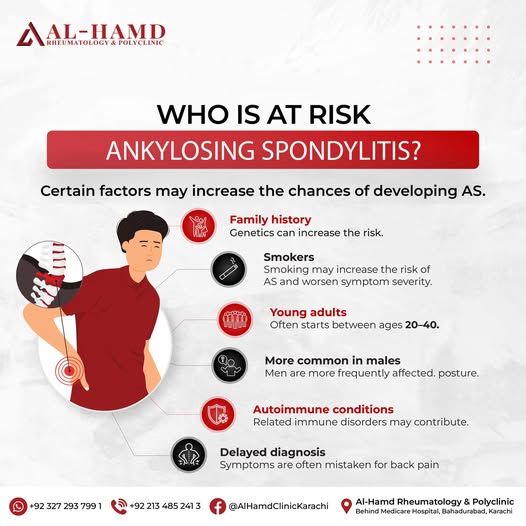
- Family history: A genetic predisposition, particularly linked to the HLA-B27 gene, increases risk
- Age: Symptoms most often begin between ages 20 and 40
- Sex: AS is diagnosed more frequently in men, though it also affects women
- Smoking: Can increase both the risk of developing AS and the severity of symptoms
- Other autoimmune conditions: Related immune disorders may raise susceptibility
Because early symptoms overlap with common mechanical back pain, AS is frequently misdiagnosed or diagnosed late, delaying treatment that could otherwise protect the spine from long-term damage.
Managing Ankylosing Spondylitis
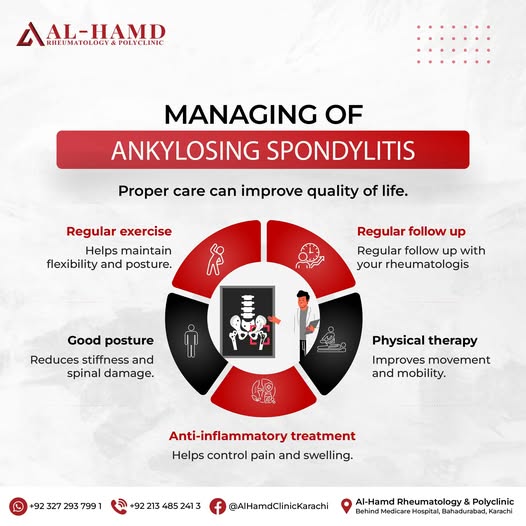
- Regular, guided exercise to maintain flexibility and posture
- Physical therapy to improve movement and mobility
- Anti-inflammatory treatment to help control pain and swelling
- Maintaining good posture to reduce stiffness and spinal damage
- Regular follow-up with a rheumatologist to monitor disease activity and adjust treatment
With consistent care, most patients with ankylosing spondylitis continue to lead active, functional lives. At Al-Hamd, Dr. Tahira Perveen — Head of the Department of Rheumatology at Liaquat National Hospital & Medical College — specializes in the early diagnosis and long-term management of AS and other inflammatory spinal conditions.
This article is for informational purposes only. Please consult a qualified doctor for medical advice.